


Every snowboarder knows the feeling—that moment when you drop into a fresh line and the board responds exactly as you hoped. What you might not realize is that this responsiveness begins deep within the board, with the wood core. The core is the structural backbone of any snowboard, dictating how the board flexes, how much pop it generates, how it dampens vibrations, and even how long it lasts. In recent years, bamboo has revolutionized snowboard core construction, offering a combination of lightweight performance, durability, and sustainability that traditional hardwoods simply cannot match. This comprehensive guide answers the most frequently asked questions about snowboard wood cores and explores why bamboo has become the material of choice for riders who demand the best.

Snowboard cores are constructed from vertically laminated strips of wood that are bonded together using waterproof adhesives under high pressure. This vertical lamination is not arbitrary—it is essential for creating a core that can withstand the extreme torsional forces and repeated flex cycles that snowboarding demands. When you carve aggressively or launch off a kicker, the core is subjected to tremendous stress, and the vertical grain orientation provides the structural integrity needed to handle these loads without delaminating or breaking.
Traditional wood species used in snowboard cores include:
Aspen: Lightweight with excellent flex memory, aspen offers quick rebound and a lively feel. It is one of the most common core materials due to its balance of performance and cost.
Poplar: Valued for its straight grain and homogeneous density, poplar provides consistent flex and is often used as a base material in combination with other woods.
Maple: Hard and dense, maple is used in stringers along the edges or under the bindings to add strength and stiffness where it is most needed.
Paulownia: An ultra-lightweight wood that is gaining popularity for its low density and good strength-to-weight ratio.
Bamboo: Though technically a grass, bamboo has become a superstar in snowboard core manufacturing. Its unique cellular structure provides exceptional strength, natural damping, and remarkable resilience.
Modern core construction often combines multiple wood species in a single core. For example, a manufacturer might use lightweight poplar in the center to reduce overall weight and add denser bamboo or maple stringers along the edges to improve edge hold and torsional stiffness. This approach allows engineers to fine-tune the board’s performance characteristics with incredible precision.

The question of the “best” wood depends entirely on what you want from your snowboard. However, if we evaluate materials based on performance, durability, weight, and sustainability, bamboo consistently ranks at the top.
Bamboo offers a unique combination of properties that make it exceptionally well-suited for snowboard cores:
Strength-to-Weight Ratio: Bamboo is stronger than many hardwoods while being significantly lighter. This means a snowboard bamboo wood core lightweight design can provide the same structural integrity as a heavier maple core, resulting in a board that is easier to maneuver and less fatiguing to ride all day.
Natural Resilience: Bamboo fibers are naturally elastic, which translates to a snowboard bamboo wood core for enhanced flex and pop. This inherent springiness gives bamboo-core boards a lively, energetic feel. When you load the board in a turn or compress it before an ollie, bamboo stores and releases energy efficiently, providing that satisfying snap that advanced riders crave.
Damping Characteristics: Bamboo absorbs vibrations effectively, smoothing out rough terrain and reducing chatter at high speeds. This natural damping creates a more comfortable ride and improves edge grip on hard-packed snow.
Durability: Bamboo’s dense fibers make it exceptionally resistant to impact and fatigue. A bamboo core is less likely to develop compression cracks or lose its flex profile over time compared to softer woods.
For riders seeking maximum performance, a snowboard bamboo wood core with carbon reinforcement takes bamboo’s natural advantages to the next level. Carbon fiber stringers or laminates are strategically placed within or on top of the core to increase stiffness, improve energy transfer, and enhance edge hold without adding significant weight. This combination is particularly popular in high-performance all-mountain and freeride boards where precision and power are paramount.
Absolutely. Wood core snowboards are the gold standard in the industry, and for good reason. The vast majority of premium snowboards—whether from boutique independent brands or major manufacturers—use wood cores because they offer performance characteristics that synthetic alternatives simply cannot replicate.
Here is why wood cores dominate the market:
Predictable and Consistent Flex: Wood has natural elasticity that provides a consistent, predictable flex pattern. This consistency allows riders to develop muscle memory and trust their equipment. Unlike foam cores, which can break down and lose their flex over time, a well-constructed wood core maintains its performance characteristics for years.
Natural Damping: Wood absorbs high-frequency vibrations better than foam or honeycomb materials. This results in a smoother ride, reduced foot fatigue, and better edge hold on icy or chattery snow.
Repairability: Should your board sustain damage—for example, a compression crack from a rock strike—a wood core can often be repaired, whereas a foam or honeycomb core is typically a write-off.
Sustainability: Responsibly sourced wood, particularly bamboo, is a renewable resource with a lower environmental footprint than synthetic core materials.
Customization Potential: Wood cores can be shaped and profiled with extraordinary precision, allowing manufacturers to create complex flex patterns and three-dimensional shapes that would be difficult or impossible with other materials.
The only significant drawback of some wood cores is weight, but this is precisely where bamboo shines. A snowboard bamboo wood core lightweight design offers all the benefits of wood construction with significantly reduced mass.
The term “core” in snowboarding traditionally refers to brands that are independently owned, rider-driven, and deeply integrated into the culture and community of the sport. However, the landscape has evolved, and many brands once considered “core” now operate under larger corporate umbrellas while maintaining their distinct identities and performance-focused philosophies.
Here are some of the most respected brands known for exceptional wood core craftsmanship:
Burton: The largest and most recognizable name in snowboarding, Burton produces a vast range of boards for every discipline. Their wood cores incorporate advanced materials like bamboo and carbon alongside traditional hardwoods.
CAPiTA: Manufactured in “The Mothership,” arguably the most advanced snowboard factory in the world, CAPiTA is known for innovative construction techniques and playful, high-performance boards.
Lib Tech: Handcrafted in Washington State, Lib Tech pioneered Magne-Traction edge technology and is revered for its commitment to sustainable manufacturing and bold, artistic graphics.
Arbor: Since 1995, Arbor has been a leader in sustainable snowboard construction, with bamboo being a signature material in their cores. Their commitment to eco-friendly practices is matched by their commitment to performance.
Jones Snowboards: Founded by legendary freerider Jeremy Jones, Jones is dedicated to backcountry exploration and sustainability. Their boards feature meticulously engineered wood cores designed for high-altitude, variable conditions.
Never Summer: Handcrafted in Denver, Colorado, Never Summer is known for its bombproof construction, hybrid camber profiles, and durable wood cores that withstand years of hard use.
Ride Snowboards: With over three decades of experience, Ride combines rider-driven design with advanced manufacturing techniques to produce boards with responsive, high-performance wood cores.
Nitro: A European brand with a long history in the sport, Nitro emphasizes eco-friendly materials and innovative design, with bamboo and sustainable woods featuring prominently in their core construction.
GNU: Lib Tech’s sibling brand, GNU is known for asymmetrical boards designed to optimize the biomechanics of snowboarding, with wood cores that provide targeted flex and responsiveness.
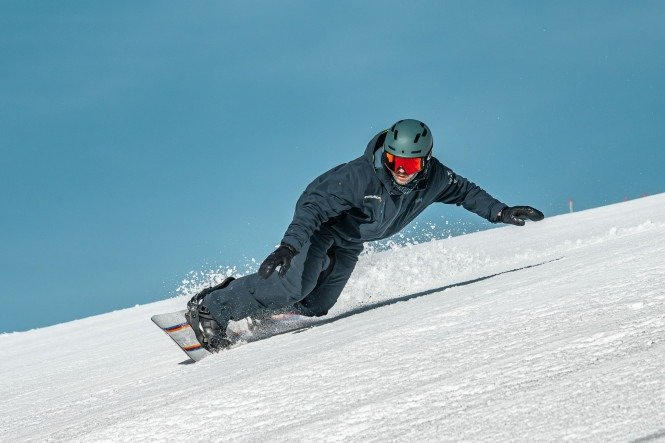
An all-mountain snowboard bamboo wood core lightweight is the ideal choice for riders who want a single board that performs across every terrain and condition. Bamboo’s natural liveliness provides a responsive feel that adapts to whatever the mountain throws at you—from groomed corduroy in the morning to chopped-up snow in the afternoon. The lightweight construction reduces swing weight, making the board easier to maneuver through trees and tight chutes, while the natural damping keeps the ride smooth and stable at speed.
For riders who live for deep days, a directional powder snowboard bamboo wood core construction offers the ultimate combination of float and maneuverability. The directional shape, with a longer nose and shorter tail, naturally keeps the tip afloat in deep snow. When paired with bamboo’s lightweight and resilient properties, this design becomes exceptionally nimble in powder, allowing you to make tight, quick turns through the trees with minimal effort. A snowboard directional shape with bamboo wood core maximizes the benefits of both the material and the shape, creating a board that feels like an extension of your body in deep snow.
In the park, performance demands are unique—boards need to be forgiving for landings, snappy for takeoffs, and durable enough to withstand repeated impacts. A freestyle snowboard bamboo wood core for park and pipe delivers on all fronts. Bamboo’s natural pop ensures that you get plenty of lift off jumps and rails, while its lightweight construction makes the board feel playful and easy to spin. The material’s exceptional durability means your board will hold up to the abuse of rails, boxes, and hard landings better than softer wood cores.
For riders who prioritize straight-line speed and edge hold, a snowboard bamboo wood core with sintered base for speed is a winning combination. Bamboo’s lightweight core reduces rotational weight, allowing for quicker edge transitions and better acceleration out of turns. A sintered base, which is more porous and absorbs wax more effectively than extruded bases, provides a noticeable speed advantage. Together, these elements create a board that is fast, responsive, and stable at high speeds.
A bamboo wood core snowboard with camber dominant profile is a favorite among riders who value precision and power. Camber—the traditional upward arch in the board’s profile—stores energy when the board is flexed, releasing it as pop and rebound. Bamboo’s natural elasticity complements camber’s energy storage perfectly, resulting in a board that feels explosive and responsive. This combination is ideal for aggressive all-mountain riders, carvers, and those who spend significant time on hard-packed snow.
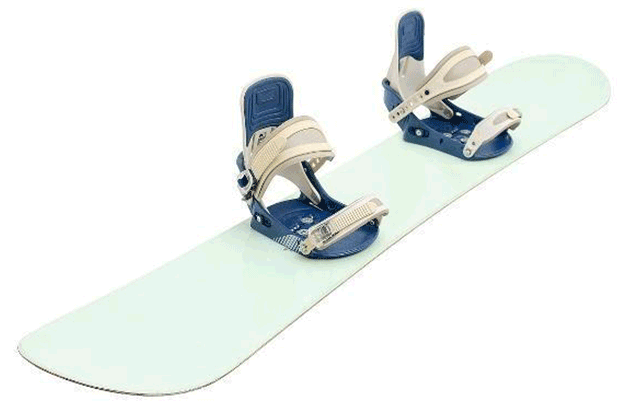
One of the most significant advancements in snowboard manufacturing is the ability to offer custom snowboard bamboo wood core flex options. Riders vary widely in weight, ability, and preference, and a one-size-fits-all flex pattern simply does not work for everyone.
Manufacturers can customize flex by:
Varying core thickness: Thicker cores are stiffer, while thinner cores are softer.
Adjusting the placement of denser wood stringers: Adding bamboo or maple stringers in specific zones can increase stiffness where needed while keeping other areas soft.
Using different wood combinations: Blending bamboo with lighter woods like paulownia can produce a softer, more forgiving flex.
Integrating carbon reinforcement: The placement and quantity of carbon fiber can be adjusted to fine-tune stiffness and energy transfer.
This level of customization ensures that every rider—from a lightweight park enthusiast to a heavy-footed powder hound—can get a board that matches their unique riding style.
Sustainable bamboo wood core snowboard construction is more than a marketing buzzword—it represents a genuine commitment to environmental responsibility. Bamboo is one of the fastest-growing plants on the planet, with some species growing up to three feet per day. It requires no pesticides or fertilizers to thrive, and its extensive root system helps prevent soil erosion. Harvesting bamboo does not kill the plant; it regenerates from the same root system, making it a truly renewable resource.
Brands like Arbor have championed bamboo for years, recognizing that high-performance materials and environmental responsibility are not mutually exclusive. By choosing a bamboo-core snowboard, riders can enjoy exceptional performance while reducing their environmental footprint.

For many years, we have been at the forefront of the Snowboard wood core industry. Our state-of-the-art manufacturing facilities have always ensured production quality, while our experienced team provides unparalleled technical support. We have a proven track record of exporting products worldwide, with a strong presence in Asia, Europe and America.
Our stringent quality control process ensures that every batch of Snowboard wood core meets standards. We work closely with our customers to ensure timely delivery and stable pricing, positioning their needs above market trends. Our dedication to customer satisfaction is reflected in our long-term partnerships, such as our decade-long partnership with one of the largest companies in the world.
The wood core is the heart of any snowboard, and bamboo has emerged as one of the most exciting materials in modern core construction. Its unique combination of lightweight performance, natural resilience, and sustainable cultivation makes it an exceptional choice for riders across all disciplines. Whether you are seeking an all-mountain board that can handle anything the mountain offers, a powder specialist that floats effortlessly in deep snow, or a park board that pops and spins with ease, a bamboo wood core delivers the performance and durability you need.
As the snowboard industry continues to evolve, bamboo is likely to play an increasingly important role in high-performance board construction. Its natural properties align perfectly with the demands of modern snowboarding, and its sustainability makes it a responsible choice for riders who care about the planet.
When you choose a bamboo-core snowboard, you are not just choosing performance—you are choosing a material that has been honed by nature over millions of years and crafted with precision by manufacturers who understand what riders truly need. That is the essence of great snowboard design.